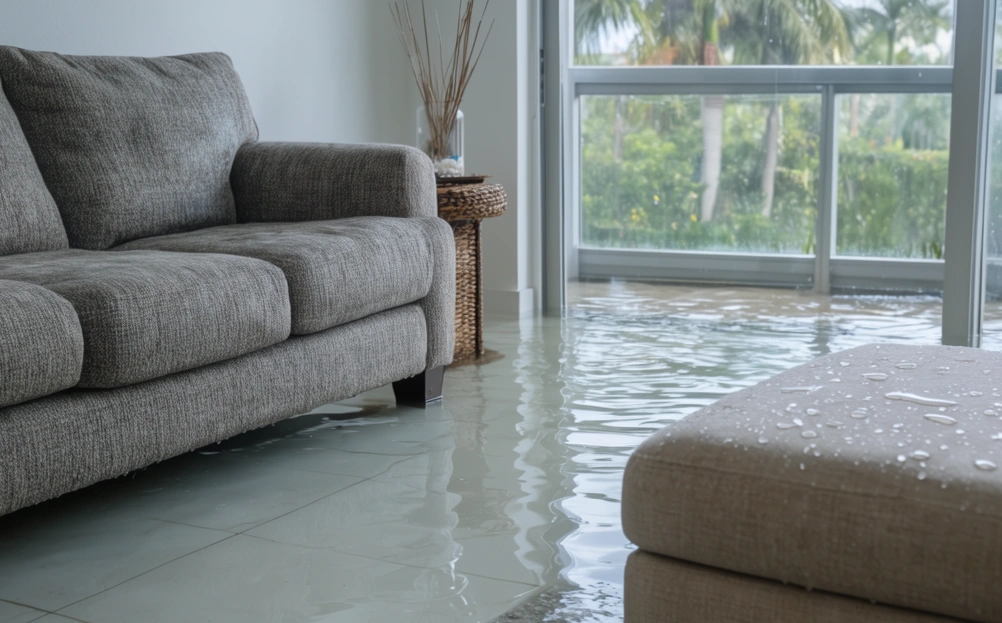
When flooding hits your Miami home or business, every hour counts. Certified 24/7 emergency response across Miami and Miami-Dade County.
📞 Call (954) 404-0081 NowWhen flooding hits your home or business in Miami, the speed of your response determines how much of your property can be saved. Disaster Recovery Systems provides certified flood cleanup Miami property owners trust, responding 24/7 with IICRC-certified technicians, industrial extraction equipment, and full insurance documentation on every job.
Miami's unique geography makes flooding worse than almost anywhere else in Florida. The city sits at an average elevation of six feet above sea level beside Biscayne Bay, and the combination of tropical storms, king tides, urban runoff, and aging stormwater systems means water damage Miami properties face is faster and more severe than in inland cities. Every hour standing water sits inside a property, it spreads deeper into walls, flooring, and structural materials.
This guide covers exactly what to do in the first hours after flooding, what a proper flood cleanup involves, and how to protect your property from mold and structural damage. Operating under the Water Floods Restoration network, the team has served Miami and Miami-Dade County for over 21 years with thousands of successful restorations completed.
When flooding hits a Miami property, shut off electricity in affected areas, stop the water source if safe, move valuables to dry ground, and call a certified flood cleanup Miami team immediately. A professional crew should be on-site within hours to begin water extraction, structural drying, and mold prevention before the damage spreads further.
Who Provides Flood Cleanup in Miami?
A State of Florida licensed, IICRC-certified disaster recovery team provides flood cleanup Miami property owners and businesses rely on. With over 21 years of experience in Miami-Dade County and more than 1,084 homes and 621 businesses restored across South Florida, the team responds 24/7 with industrial-grade equipment.
Services include emergency water extraction, structural drying, moisture mapping, mold remediation, and full insurance documentation, available around the clock including weekends and holidays.
Why Miami Properties Face Extreme Flood Risk
Miami is one of the most flood-vulnerable cities in the United States. Understanding why helps property owners act faster when water intrusion begins. Flood cleanup Miami residents need is often more urgent than in other cities because several conditions combine to accelerate damage here.
Miami sits on porous limestone bedrock that absorbs water quickly, pushing it up through foundations during heavy rain events. The city's proximity to Biscayne Bay means storm surge from Atlantic hurricanes can push several feet of seawater inland within hours. Urban flooding is also common because Miami's stormwater system was built for smaller rain events and becomes overwhelmed during tropical storms. On top of all this, Miami's year-round humidity above 75% means any moisture left in a property after flooding feeds mold within 24 hours. Water damage in Miami moves faster and spreads further than in most other Florida cities.
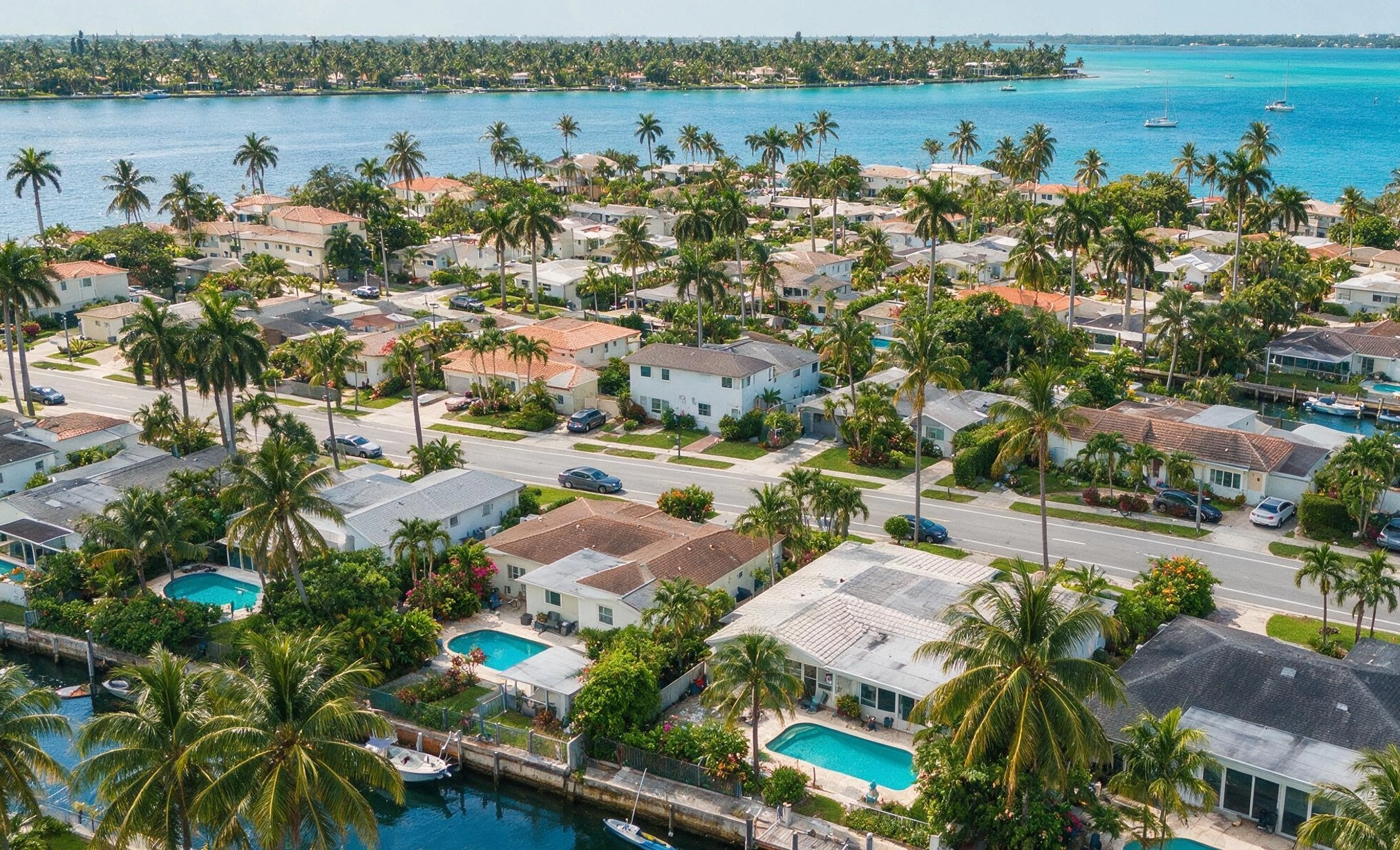
Miami's low-lying residential neighborhoods sit beside Biscayne Bay, making them among the most flood-exposed areas in South Florida.
Check Miami-Dade County's flood zone map before hiring any restoration company. Properties in AE and VE flood zones need a team with coastal flood experience, not just standard water damage response. The cleanup protocol for storm surge is different from a pipe burst, and the wrong approach leaves hidden saltwater contamination behind.
5 Immediate Steps for Flood Cleanup in Miami
The first actions you take in the hour after flooding begins determine how much of your property can be saved. Follow these steps in order before the flood cleanup Miami team arrives.
Cut Electricity to Affected Areas
If water has reached electrical outlets, panels, or appliances, shut off the main breaker immediately from a dry location. Do not step into standing water if you are unsure whether the electricity is off. Safety comes before any salvage attempt.
Stop the Water Source
If the flooding is from a burst pipe or appliance failure, locate your main shutoff valve and close it immediately. In Miami condominiums and high-rises, building management controls the main riser shutoff. For storm flooding or surge, focus on moving valuables to higher ground instead.
Document Everything Before Moving It
Take photos and video of all affected areas, damaged belongings, and the water level before touching anything. This documentation directly supports your insurance claim and must be done before any cleanup begins.
Move Valuables to Dry Ground
Carry documents, electronics, photos, and valuable items to an unaffected room or floor. Do not use household fans or consumer dehumidifiers. They cannot lower Miami's ambient humidity fast enough to prevent mold growth, and they can spread airborne contamination from floodwater.
Call a Certified Flood Cleanup Team Immediately
Contact a certified flood restoration company as soon as the area is safe to stay in. In Miami's climate, professional response within the first few hours is the single most effective action for limiting total property damage and preventing mold from establishing.
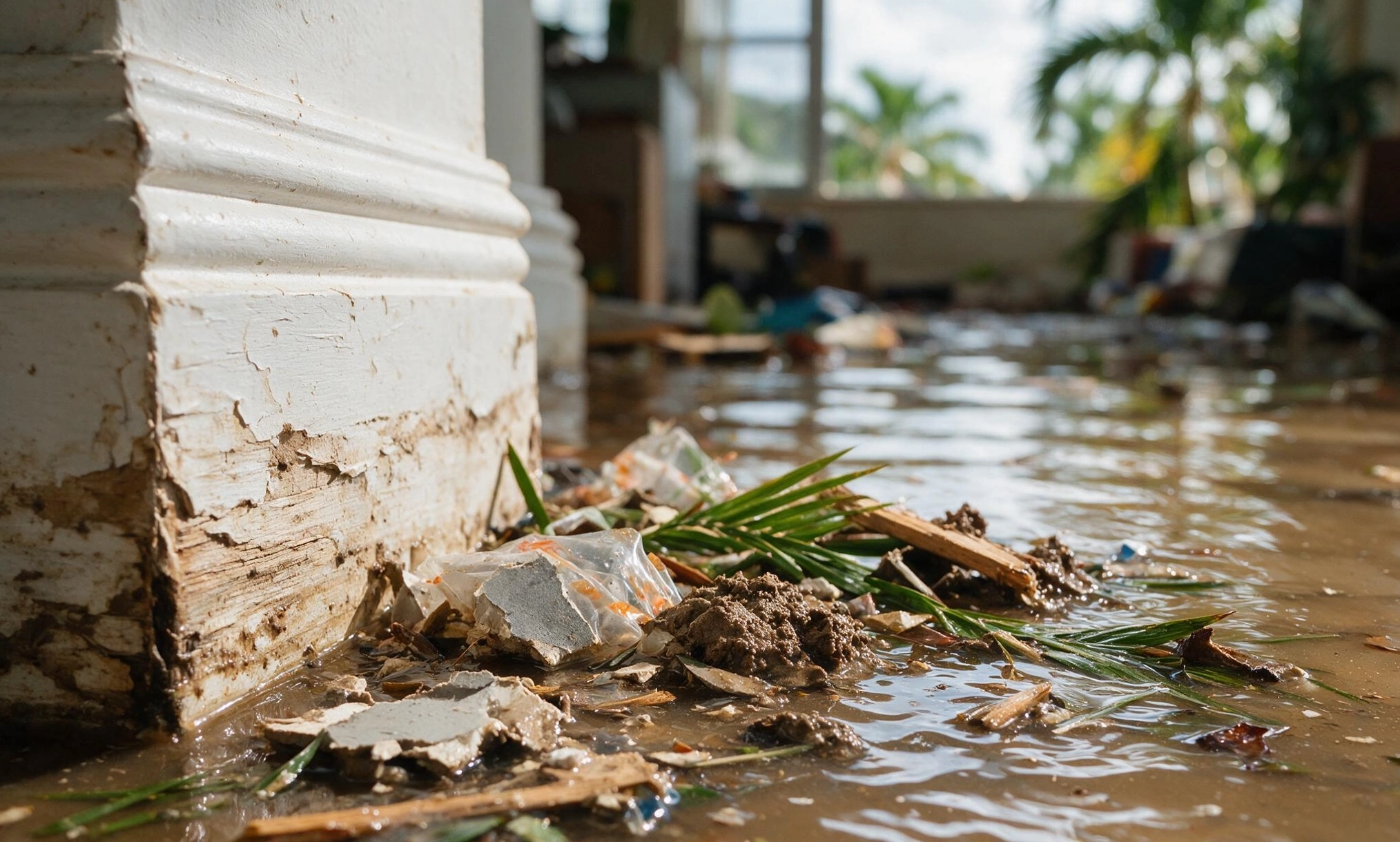
Murky flood water on a South Florida residential floor contains debris and contaminants that require certified professional cleanup, not household equipment.
Do not use household fans or consumer dehumidifiers on flood water. Miami's year-round humidity above 75% means consumer equipment cannot lower moisture levels fast enough to prevent mold growth. Industrial air movers and commercial dehumidifiers are the only tools capable of achieving the drying standards required in this climate.
What Flood Cleanup in Miami Actually Involves
A proper flood cleanup Miami response involves far more than removing standing water. The team follows a structured process based on IICRC S500 standards to ensure every affected material is properly dried, treated, and documented before the restoration phase begins.
- ✓Emergency inspection and moisture mapping using thermal imaging cameras and moisture meters to locate all water-affected areas including behind walls, under flooring, and inside insulation.
- ✓Industrial water removal using truck-mounted and portable extractors to pull standing and absorbed water from every surface across the property.
- ✓Structural drying with commercial air movers and low-grain refrigerant dehumidifiers placed throughout the affected space, with moisture readings tracked daily to confirm drying progress.
- ✓Antimicrobial treatment applied to all wet surfaces to prevent mold colonization during the drying process in Miami's high-humidity environment.
- ✓Mold inspection and remediation if mold growth is detected or if drying was delayed beyond 24 hours in Miami's subtropical climate.
- ✓Full Xactimate documentation with photos, moisture logs, and itemized reports accepted by all major insurance carriers from the first day on-site.
Flood cleanup in Miami typically takes 3 to 5 days for structural drying, followed by 1 to 3 weeks for full restoration depending on the extent of damage. Miami's year-round humidity above 75% makes drying significantly more complex than in drier regions, which is why industrial equipment calibrated for subtropical conditions is required rather than standard commercial units.
How Mold Spreads After Flooding in Miami
In Miami's heat and humidity, mold after flooding is not a possibility, it is a certainty if the property is not professionally dried within the first 24 hours. Mold spores colonize wet drywall, insulation, and wood framing before any visible growth appears, making early flood cleanup Miami response the most effective mold prevention available. The same conditions that make water damage Miami properties face so severe also accelerate mold growth beyond the rates seen in most other US cities.
Standard IICRC guidance gives a 24 to 48 hour window before mold begins establishing in flooded properties. In Miami, where temperatures stay between 75 and 90 degrees year-round and humidity rarely drops below 70%, the practical window is closer to 24 hours. Properties that are not professionally dried within that period almost always develop mold behind walls or under flooring that was not visible during the initial cleanup. A disaster recovery team that confirms complete drying with moisture meter readings before closing the job is the only reliable way to prevent this.
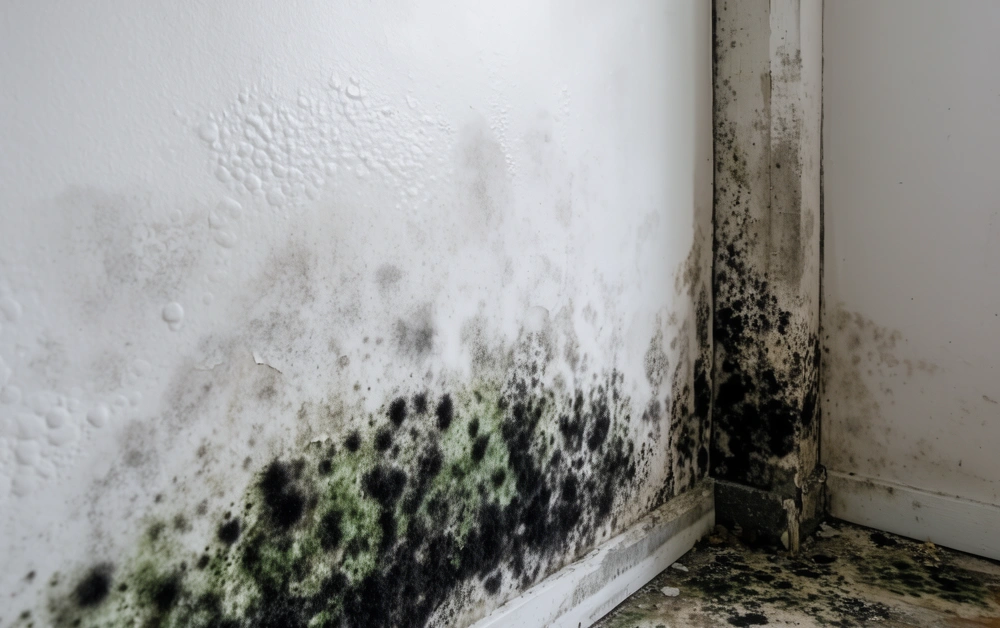
Black and green mold spreads on drywall within 24 hours of flooding in Miami's subtropical climate when professional drying is delayed.
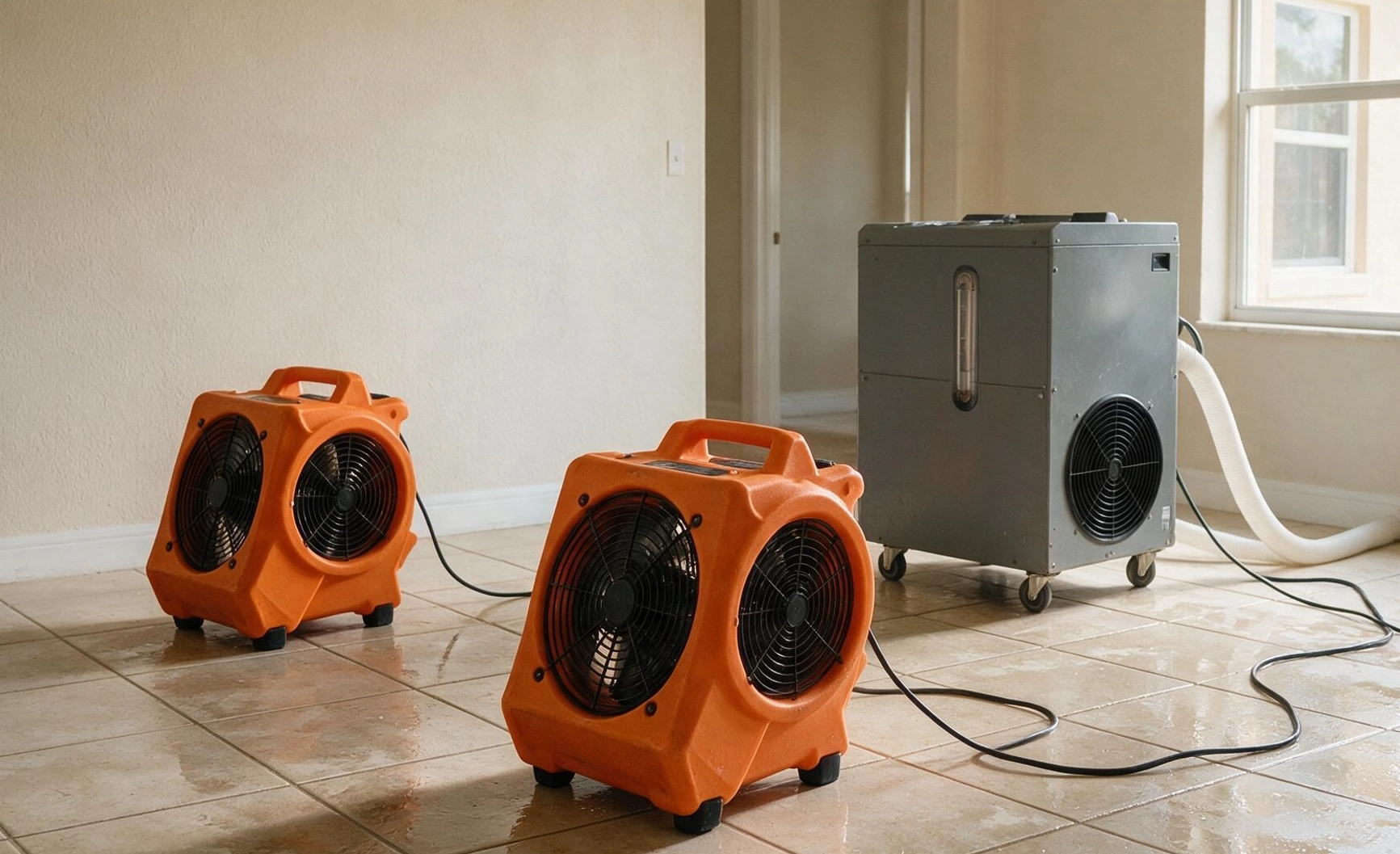
Industrial orange air movers and a commercial dehumidifier deployed during a Miami flood cleanup job to accelerate structural drying.
In Miami's climate, mold can begin establishing within 24 hours, faster than the standard 48-hour window used in most other regions. Same-day response to flood damage is not optional in Miami. It is the difference between a targeted drying job and a full mold remediation that costs several times more.
Flood hitting your Miami property right now? Do not wait while water spreads deeper into your walls and flooring. Call the Miami-Dade hotline at (305) 967-7509 for immediate response.
How Much Does Flood Cleanup Cost in Miami?
Most Miami homeowners and business owners want to know the cost before calling a restoration company. Getting an accurate number requires a moisture inspection since the total depends on the size of the affected area, the category of water, and whether mold remediation is needed.
Flood cleanup in Miami typically costs between $2,000 and $10,000 or more depending on the size of the property, the extent of the water intrusion, and whether mold remediation is required. Flood damage cleanup Miami projects involving storm surge or sewage contamination cost more due to the additional decontamination protocols required. Most homeowners insurance policies cover sudden water damage from internal sources, and the team provides full Xactimate documentation to support your claim from day one.
Insurance claims handled from start to finish
Filing a flood damage claim in Miami does not have to be overwhelming. The team documents every step with moisture readings, thermal images, and itemized Xactimate reports that insurance carriers accept without dispute. Every phase is covered from the initial moisture inspection to the final restoration invoice. Learn more on the insurance support page.
What to Look for in a Miami Flood Cleanup Company
Not every company offering flood damage cleanup Miami services is qualified to handle the job correctly. These are the four things that separate a certified local team from an unqualified contractor.
- IICRC certification confirms the team is trained to industry standards for moisture control, structural drying, and mold prevention protocols specific to subtropical climates like Miami.
- Local Miami experience means the team understands the city's flood zones, Biscayne Bay tidal patterns, HOA requirements, and building types that affect how restoration must be sequenced.
- Direct insurance coordination with Xactimate estimating ensures your claim is documented completely and processed without a payout shortfall caused by incomplete damage records.
- 24/7 true availability means someone answers when you call at 3am during a tropical storm, and a crew can be on-site within hours, not the next business day. Visit the full services page for credentials and capabilities.
Serving Miami and All of Miami-Dade County
The team provides flood cleanup Miami homeowners and businesses across all of Miami-Dade County can count on, 24 hours a day. For the Miami-Dade hotline, call (305) 967-7509 directly for the fastest scheduling across Miami and surrounding communities.
Frequently Asked Questions
Need Flood Cleanup in Miami Right Now?
Disaster Recovery Systems responds 24/7 across Miami and all of Miami-Dade County. The faster you call after flooding begins, the more of your property can be saved. Do not wait while water spreads deeper into your home.